A New Era for Customer Data: Rethinking the CDP with Databricks CustomerLake
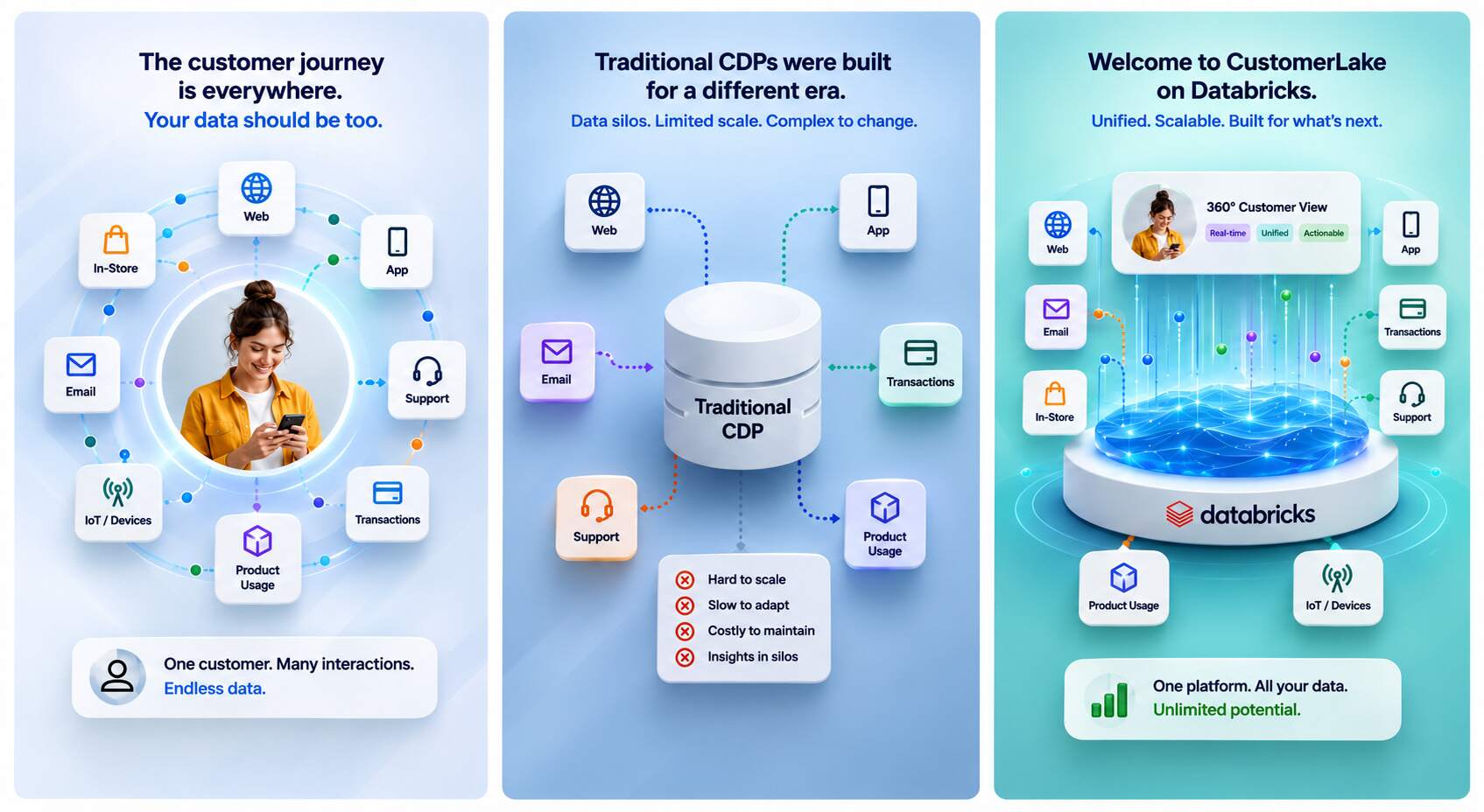
Traditional customer data platforms were designed to help organisations unify customer information, build audiences and activate campaigns more efficiently. For many businesses, however, the CDP has gradually become another isolated layer within an already complex technology environment.
Customer data is copied from CRM, commerce, digital, service and operational systems into a separate platform. Identity rules, audience definitions and activation workflows are then managed through proprietary logic that may be difficult to inspect, reuse or transfer.
As customer journeys become more complex and organisations expand their use of AI, this model is becoming increasingly difficult to maintain.
Databricks CustomerLake introduces a different approach. Instead of creating another independent copy of customer data, it brings customer profiles, identity resolution, audience creation and activation closer to the governed enterprise data and AI foundation.
Why Organisations Are Rethinking the Traditional CDP
Modern customer decisions require more than marketing data because customer journeys now span digital channels, service interactions, transactions, product usage and operational events. Customers also expect organisations to respond to their current circumstances, rather than rely solely on previous clicks or campaign history.
This makes broader, governed customer context essential for relevant personalisation, effective AI and responsible decision-making.
A retailer may need to combine purchase history, stock availability, loyalty data, digital behaviour and returns. A telecommunications provider may want to connect customer interactions with billing, contracts, devices and network experience. A financial services organisation may need to consider consent, eligibility, risk, service activity and customer value before presenting an offer.
Traditional CDPs often operate with only a selected portion of this information. This can result in duplicated storage, repeated transformation logic, fragmented governance and rising integration costs.
The challenge extends beyond technical complexity. When identity rules, suppression logic, consent conditions and customer definitions are contained within a separate platform, organisations may struggle to explain how an audience was created or why a customer received a particular treatment.
CustomerLake can help bring these capabilities into a more transparent, connected and governed environment.
CustomerLake Migration Is More Than a Data Transfer
Moving from a traditional CDP to Databricks CustomerLake extends far beyond the technical transfer of data. The most important dependencies often lie beneath the surface, within identity rules, audience logic, consent controls and operational processes.
Years of customer and campaign logic may be distributed across audience definitions, custom scripts, manual workflows and connector configurations. These may include identity priorities, profile merge rules, consent conditions, customer-value calculations, exclusion logic and destination-specific requirements.
If these rules are not identified, documented and tested, the new environment may produce different profiles, different audiences and different business outcomes.
A successful Databricks CustomerLake migration therefore requires more than technology implementation. It demands a structured review of the existing customer-data estate, including its sources, dependencies, identity logic, privacy controls, activation processes and measurement framework.
A Controlled Transition Reduces Risk
A complete cutover in a single phase creates unnecessary risk, particularly where customer communication, regulatory obligations and revenue-generating campaigns depend on the existing platform.
A safer approach is to operate the legacy CDP and the Databricks environment in parallel during the transition.
The organisation can first establish a governed customer data product, recreate identity and consent logic, validate priority audiences and test activation with selected destinations. The two environments can then be compared at customer level.
This makes it possible to identify differences in profile counts, audience membership, consent status, suppression behaviour and destination match rates before the legacy platform is retired.
What a Strong CustomerLake Foundation Should Include
The target environment should preserve source data, standardise and validate records, create governed customer and identity models, and provide controlled publishing to engagement platforms.
Identity resolution should be versioned and testable. Consent should be evaluated when customer data is used. Audience outputs should be monitored and reconciled. Models and scores should be reusable across marketing, analytics, service and operational use cases.
The architecture should also support different latency requirements.
Not every customer-data process needs to operate in real time. A live recommendation may require immediate context, while a monthly retention campaign may be fully supported by scheduled processing.
Selecting batch, micro-batch or streaming according to business value can reduce cost and operational complexity without compromising responsiveness where it matters.
Business Benefits of Databricks CustomerLake
When implemented effectively, CustomerLake can help organisations reduce duplicated storage and integration effort, improve data lineage, strengthen access control and accelerate audience creation.
It can also bring customer data closer to predictive models, analytics and AI-powered decisioning.
Marketing and sales teams may gain faster self-service access to trusted customer information. Data teams can reuse governed pipelines, identity services and activation patterns. Business leaders can gain more reliable insight into customer behaviour, campaign performance and commercial opportunities.
From Monolithic CDPs to Composable Customer Intelligence
The customer-data market is moving away from rigid, application-led stacks towards more flexible, data-led operating models.
Packaged CDPs will continue to have a role, particularly where rapid deployment and bundled channel execution are priorities. Lakehouse-native and composable approaches are likely to be more attractive to organisations with complex data estates, mature engineering capabilities and a growing need to combine customer, product and operational context.
Strategic value will increasingly reside not in the CDP application itself, but in the governed customer data, intelligence and decisioning capabilities that support it.
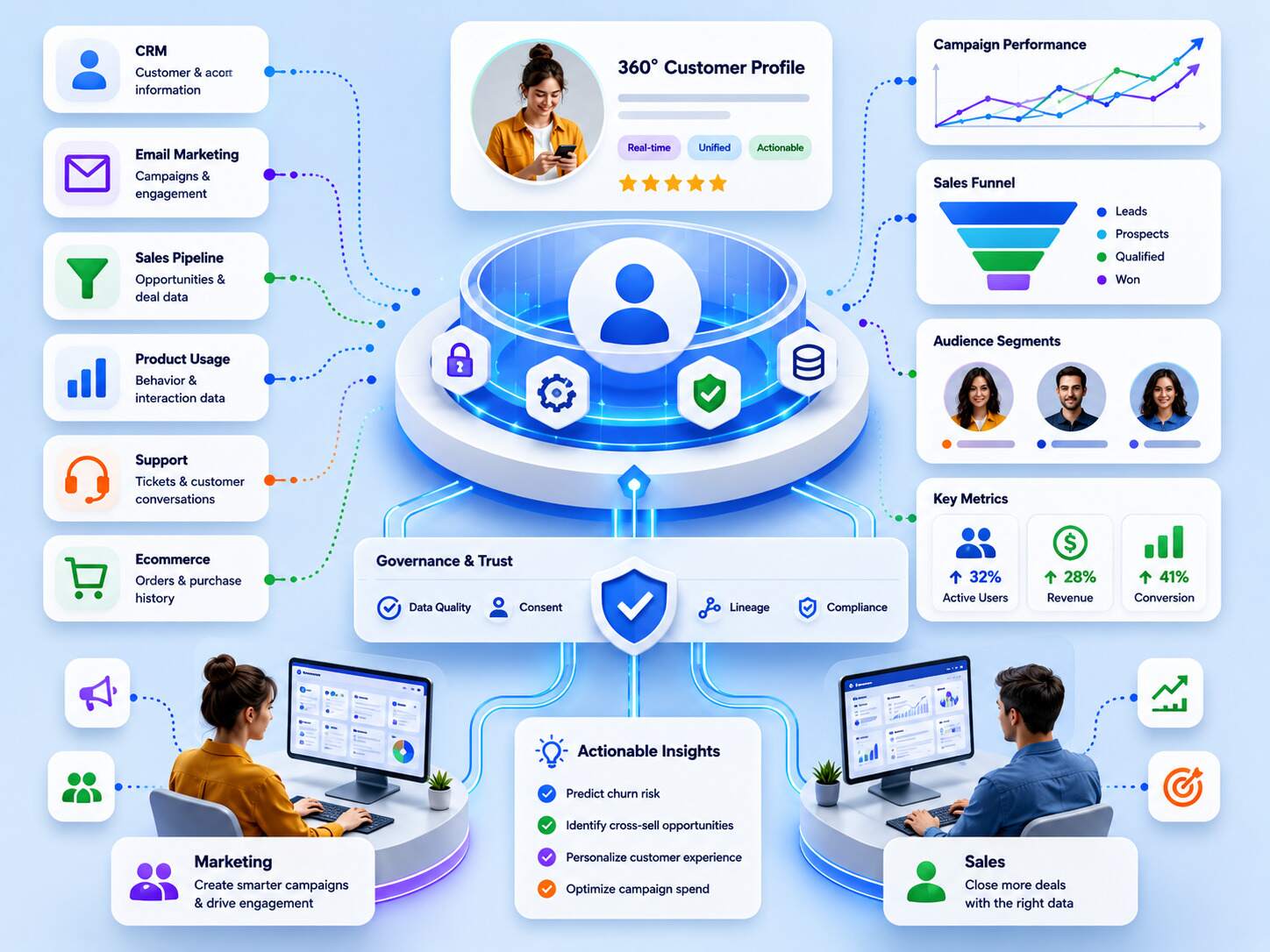
Lasting value will come from a governed customer model, reliable identity evidence, enforceable consent controls, transparent decision logic and a measurement framework that remains effective as individual technologies evolve.
Turning CustomerLake into a Measurable Business Opportunity
A successful transition begins with a clear understanding of current data maturity, identity risk, activation dependencies and the use cases most likely to demonstrate value.
The white paper provides a practical methodology for planning this transition, including readiness assessment, target architecture, engineering controls, identity validation, risk mitigation, cutover and value realisation.
Abylon can help you evaluate your existing CDP landscape, uncover hidden migration risks and create a controlled Databricks CustomerLake roadmap aligned with measurable business outcomes.
Take the next step. Download the whitepaper to explore the complete CustomerLake migration methodology.
Then speak with Abylon about a CustomerLake readiness assessment and identify where your organisation can reduce complexity, strengthen customer intelligence and accelerate measurable value from data and AI.
* At the time of publication, Databricks CustomerLake is available in Private Preview. Product capabilities, regional availability, support arrangements and commercial terms should be confirmed with Databricks before production adoption.

Author of the post:
Rob Tillman - VP & UK Country Manager at Abylon Consulting. Linkedin Profile